It is easy to buy rehabilitation equipment with a hopeful goal: reduce pain, walk better or recover faster. But a knee brace, walking boot or electric pedal exerciser cannot decide how it should be used. When the product does not match the injury, stage of recovery or intended activity, it may sit unused—or create false confidence.
The strongest reason to buy rehab equipment is not the product itself. It is the specific function the user wants to regain: walking to the bathroom, controlling the knee during movement, protecting an injured area or completing a prescribed exercise routine at home.
What Buyers and Caregivers Are Actually Worried About
Most families do not begin with a product specification. They begin with a moment that feels increasingly difficult:
- The buyer chooses a brace based only on where the pain is located.
- The product feels too tight, too loose or uncomfortable after a short time.
- An exerciser is purchased without a schedule or measurable goal.
- The user expects equipment alone to replace rehabilitation guidance.
- Money is spent on several products, but none becomes part of a consistent routine.
What Happens When Families Keep Waiting
Buying without a clear goal often leads to wasted products and delayed progress. The user may stop wearing the brace, use the walking boot incorrectly or abandon the exerciser because nobody defined what success should look like. Repeated trial-and-error can cost more than getting the right guidance first.
What the Right Purchase Can Change
When equipment is matched to a professional recommendation and a realistic daily goal, the purchase becomes easier to evaluate. The user knows when to wear it, how it should feel and what activity it is meant to support. That clarity makes the equipment more likely to be used consistently.
Turn “Get Better” Into a Working Goal
A useful goal describes an activity: walk to the bathroom with a chosen level of help, tolerate a prescribed exercise period, protect an injured area during an approved phase, or improve a measured movement. It also states who will review progress and when.
A physiotherapist, occupational therapist or doctor should guide goals where injury, surgery, neurological conditions or significant mobility changes are involved. Rehabilitation equipment should support that plan rather than replace assessment.
Support and Restriction Are Different Jobs
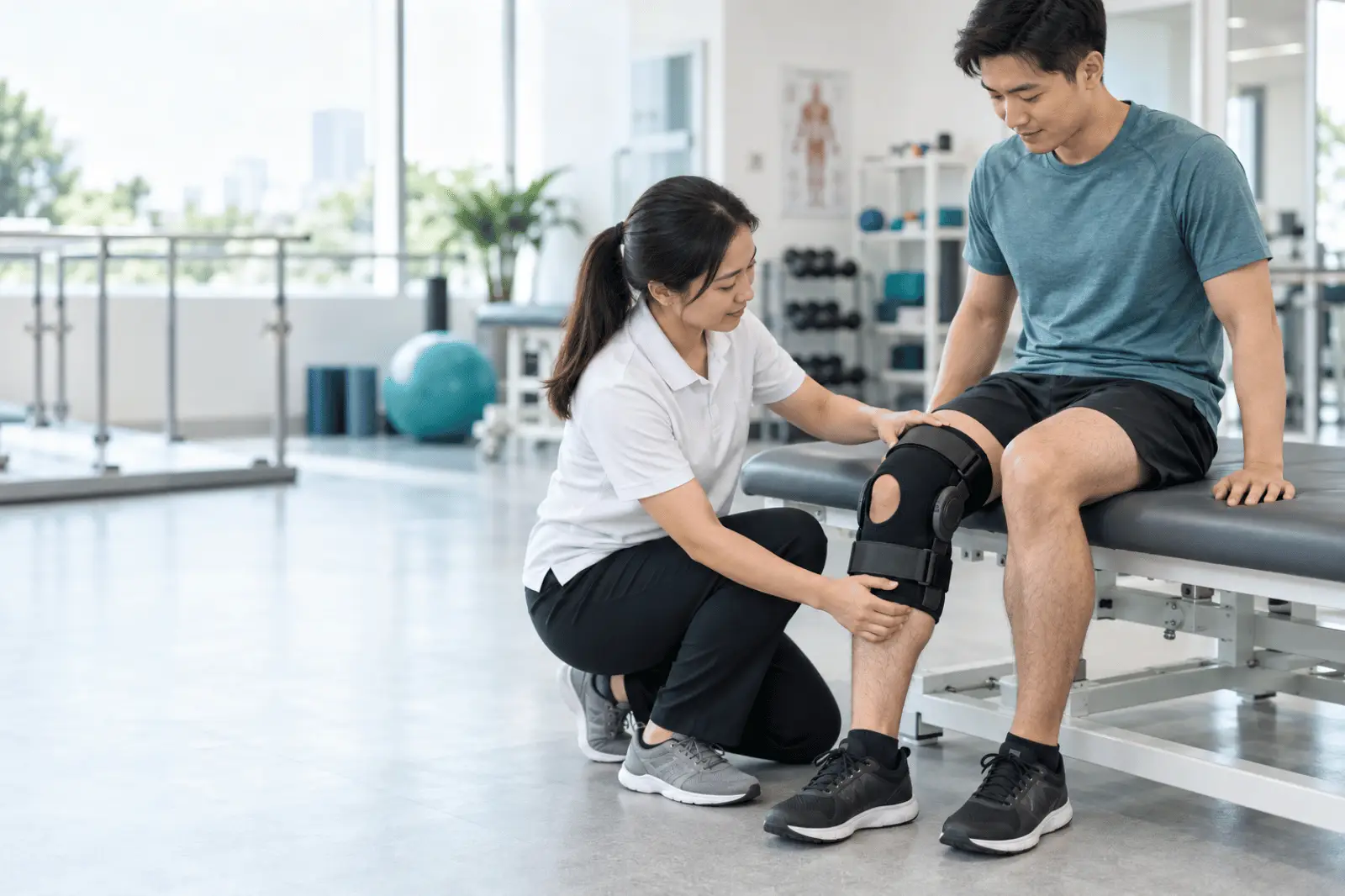
A knee brace may provide support, alignment or controlled movement depending on its design. Different brace types should not be treated as equivalents without checking the prescribed purpose.
Too little control may fail to protect the intended area, while unnecessary restriction can interfere with movement. Confirm the diagnosis, side, size, permitted range and wearing schedule with the treating professional.
A Walking Boot Still Needs Correct Fit
A walking boot changes how the lower leg and foot are supported. Fit affects comfort, pressure and function. Follow the model-specific sizing method and fitting instructions rather than relying on ordinary shoe size alone.
Check the skin regularly as advised, especially around bony areas and straps. Ask the clinician about weight-bearing status, walking aids, footwear on the other foot and any movement restrictions. Do not alter air cells or supports without the recommended instructions.
Exercise Equipment Needs a Dose
An electric pedal exerciser can assist repeated upper- or lower-limb movement, but the session still needs a defined duration, resistance approach, posture and stop criteria. More movement is not automatically better.
Place the unit where it cannot slide, and ensure the chair or seating position is stable. A professional can help determine whether the movement suits the user and how it should progress.
Fit Rehabilitation Into Daily Life
The best plan is one the person can repeat. Consider where equipment is stored, who helps to put it on, how long preparation takes and which daily activity provides a natural reminder.
Record useful observations such as comfort, assistance required and task completion. Progress is not always a straight line; new pain, swelling, skin changes or loss of function should be escalated to the treating team.
Use Review Points, Not Guesswork
Agree on the date or milestone for review before beginning. The review might consider a change in movement, reduced assistance, improved tolerance or whether the device still fits correctly. Without a review point, equipment can continue unchanged after its original purpose has shifted.
Keep the product instructions and clinical recommendations together. If several family members assist, make sure everyone follows the same fitting and exercise process. Consistency allows the treating professional to interpret progress more accurately.
Neolee Rehabilitation Options to Compare
Compare each item according to the clinical goal, fit and instructions—not by brand recognition or the number of visible features.
AirCast AirSelect Series Standard Walker Boot — A walking boot to consider when the treating professional has defined protection, fit and use requirements.
DonJoy Stabilax Knee Brace — A knee-support option to compare against the prescribed stability and movement goal.
ProCare Reddie Knee Brace — Another brace design for a clinician-led comparison of fit, support and intended activity.
Neo Electric Pedal Exerciser — An assisted exercise device to include only when session setup and progression have been defined.
Browse Neolee rehab equipment with a written goal and professional recommendations beside you. When comparing rehab equipment suppliers in Malaysia, ask how each product’s fit, instructions and support pathway connect to that goal.
Take the Next Step Before the Routine Gets Harder
Do not buy another rehabilitation product based only on a symptom. Define the recovery goal with a qualified professional, then compare NeoLee rehab equipment by fit, function and intended use.
Practical Checklist Before You Buy
Bring the following information when comparing models online or speaking with a supplier:
- Diagnosis and professional recommendation
- Specific activity or protection goal
- Correct side, size and adjustment range
- Wearing or exercise schedule
- Skin, pain and swelling monitoring
- Who helps with setup and removal
- Date or milestone for reassessment
Where a user has a wound, sudden mobility change, significant pain, complex posture or a prescribed clinical plan, confirm the decision with the relevant healthcare professional.
Useful NeoLee Internal Links
Continue your research through the most relevant product categories:
Frequently Asked Questions
1. What is rehabilitation equipment?
It includes products that support recovery, movement, protection, positioning or exercise as part of a defined rehabilitation plan.
2. Do I need professional advice before buying a knee brace?
Professional guidance is recommended when a brace is related to injury, surgery, instability or significant pain, because different designs provide different types of support.
3. How should a knee brace fit?
It should follow model-specific sizing and fitting instructions without causing harmful pressure, numbness or skin problems.
4. Is a walking boot sized the same as normal shoes?
Not necessarily. Follow the exact product sizing method and clinician instructions.
5. Can I walk normally in a walking boot?
Weight-bearing status and walking method should be confirmed with the treating professional. Some users may also require walking aids.
6. What is an electric pedal exerciser used for?
It supports repeated upper- or lower-limb movement, but posture, duration, resistance and suitability should be defined.
7. Is more exercise always better during rehabilitation?
No. Progression should follow the rehabilitation plan. Pain, swelling, fatigue or loss of function may require review.
8. How do I know whether rehab equipment is working?
Track the activity it was meant to support, comfort, assistance required and clinician-defined outcomes.
9. When should equipment be reassessed?
Reassess at the agreed milestone or sooner if pain, swelling, skin changes or function worsens.
10. Where can I find rehab equipment suppliers in Malaysia?
NeoLee’s rehabilitation category includes braces, walking boots and exercise equipment that can be compared against professional recommendations.