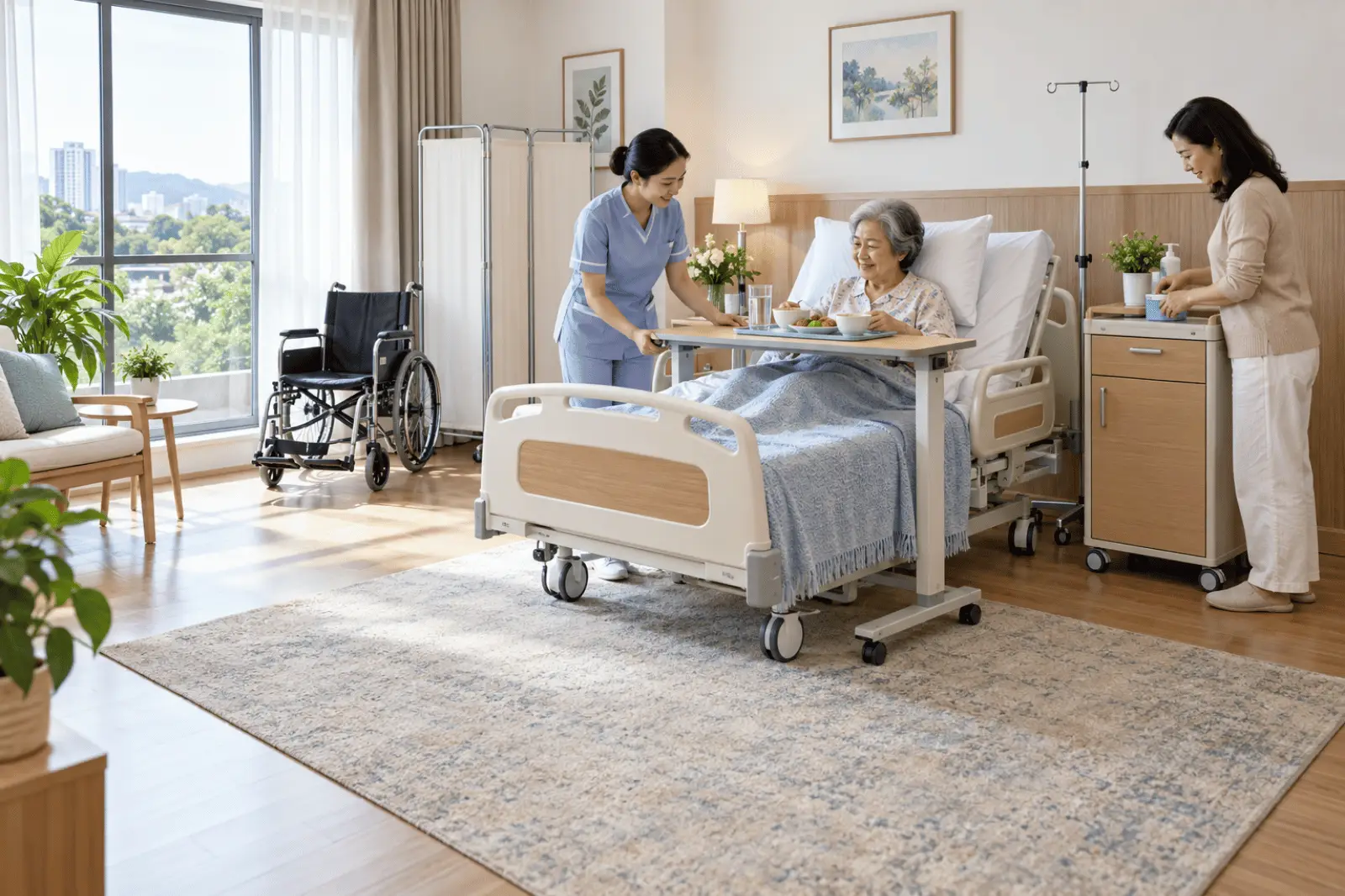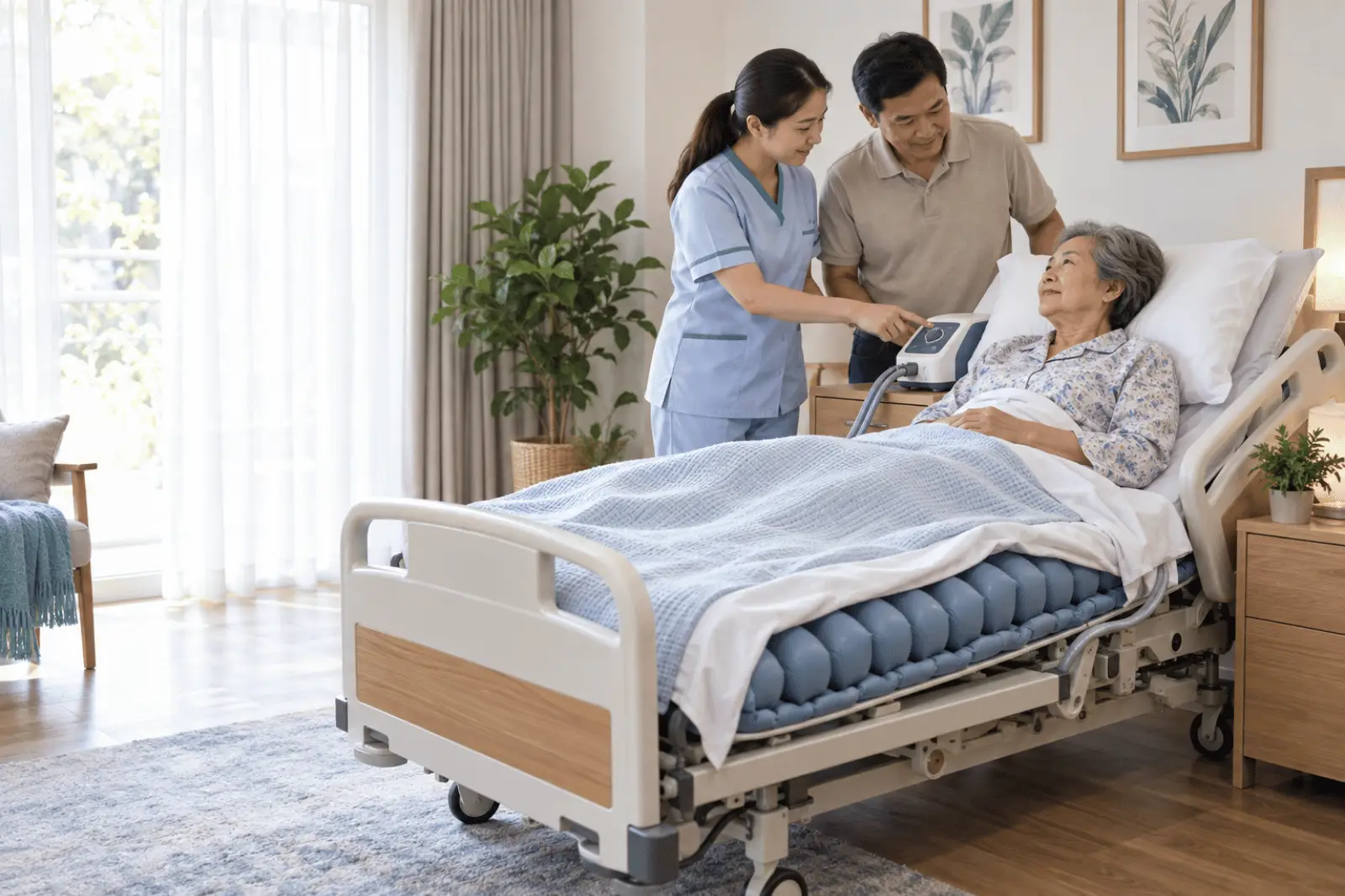
When someone in the family is about to be discharged from hospital, there’s usually a long list of things to sort out.
Will they be able to walk to the bathroom? Do we need to get a hospital bed? Who’s going to look after them during the day? And if they have regular follow-up appointments, how are we going to get them there?
Then comes another question that can be just as worrying: how much is all of this going to cost?
These are the kinds of concerns Malaysian families deal with every day. And having worked with patients, caregivers and their families for more than 20 years, we at Neolee Rehab Supply know that caring for someone at home often involves much more than people initially expect.
That’s why we paid particular attention to several announcements in Malaysia’s Budget 2027, presented on 9 October 2026.
There are increases in financial assistance for people with disabilities and chronic illnesses, changes to tax relief for caring for elderly parents, support for wheelchair-accessible transport, and measures affecting nursing home fees.
Some changes will put a little more money into eligible households. Others may make professional care and healthcare services more accessible.
We’ve gone through the announcements and picked out the ones we believe matter most to Malaysian families.
Here’s what you should know.
Budget 2027 at a Glance
If you’re short on time, these are the main announcements worth knowing about.
Swipe or scroll within the table to see both columns.
| Budget 2027 announcement | What’s changing |
|---|---|
| RM600 monthly care assistance | Announced increase from RM500 for eligible bedridden OKU and chronic patients, including qualifying non-bedridden chronic patients |
| RM8,000 tax relief for parents and grandparents | Proposed expansion to cover a wider range of qualifying caregiving expenses from Year of Assessment 2027 |
| Up to RM50 transport subsidy | Proposed support for eligible pre-booked paratransit journeys |
| RM2,000 income threshold for working OKU | Proposed increase from RM1,700 for eligibility under EPOKU |
| RM200 special education allowance | Announced increase from RM150 per month |
| RM1.3 billion elderly assistance | Continued support expected to benefit nearly 200,000 seniors |
| Lower nursing home service tax | Proposed reduction from 8% to 6%, with exemptions for qualifying fees |
| RM80 million for PeKa B40 | Continued health screening and approved medical equipment assistance |
| RM60 million Medical Assistance Fund | Increased from RM40 million |
Not every change starts immediately. Some measures take effect in 2027, and a few still need detailed guidelines from the relevant government agencies.
Let’s look at what they mean in everyday situations.
1. RM600 Monthly Care Assistance for Bedridden OKU and Chronic Patients
For someone caring for a family member who is bedridden or seriously ill, even an extra RM100 a month can help.
Budget 2027 announced that the monthly assistance for eligible bedridden persons with disabilities (OKU) and chronic patients will increase from RM500 to RM600.
That works out to an additional RM1,200 over twelve months for someone who receives the full year’s assistance at the new rate.
It may not sound like a lot when you’re dealing with larger expenses such as medical equipment or professional caregiving. But families also have smaller, recurring costs to manage. Adult diapers, hygiene products, transport, nutritional supplies and other daily essentials can add up.
Who can apply?
The existing scheme is called Bantuan Penjagaan OKU Terlantar/Pesakit Kronik Terlantar/Pesakit Kronik Tidak Terlantar (BPT) and is administered by the Jabatan Kebajikan Masyarakat (JKM).
Based on JKM’s currently published conditions, it covers certain situations involving:
- Caregivers looking after bedridden persons with disabilities or chronic illnesses.
- Chronic patients who are not bedridden but require continuous treatment for at least three months.
- Eligible bedridden patients without a qualifying caregiver.
The currently published monthly household income limit is RM5,000. Applicants must also meet the scheme’s citizenship, residency and other requirements. Check with JKM for the conditions that apply when the revised rate takes effect.
The important thing to remember is that having a chronic illness does not automatically qualify someone for the allowance. JKM will need to assess the individual circumstances.
Where to enquire
You can start with your nearest JKM district office or visit the official BPT information page.
The existing government page may still show RM500 while the announced 2027 increase awaits implementation.
Official reference: MyGovernment BPT guide in English
Official reference: MOF Budget 2027 Touchpoints, page 19
2. Caring for Your Parents? The RM8,000 Tax Relief Is Being Expanded
This is an announcement that working adults supporting their elderly parents should pay attention to.
Malaysia already provides individual income tax relief of up to RM8,000 for specified expenses involving parents and grandparents.
Under Budget 2027, the government proposes expanding the types of caregiving expenses that qualify.
Previously, the relief covered specified medical treatment and care expenses. The new proposal broadens the scope of eligible caregiving expenditure at home, daycare centres and residential care centres, rather than limiting it to healthcare-related expenses.
The proposed changes will take effect from Year of Assessment 2027, subject to the applicable tax rules.
How might this help a family?
Consider someone who works full-time while arranging professional care for an elderly parent.
There may be expenses for a caregiver coming to the house, care services during working hours or residential care arrangements.
The expanded relief could make more of these expenses eligible for a tax deduction, provided the conditions are met.
There is also a proposed change to the documentation requirements for caregiving claims. Instead of requiring a doctor’s certification for the revised caregiving expenditure, the tax annex provides for a written declaration from an eligible caregiver or a copy of the caregiver’s work permit, together with receipts. For these claims, the caregiver cannot be the taxpayer, their spouse or their child.
Does RM8,000 tax relief mean RM8,000 back from LHDN?
No, and this is worth clarifying.
Tax relief reduces your taxable income. It is not a cash payment from the government.
For example, if you have RM8,000 in qualifying expenses and your applicable marginal tax rate is 11%, the potential tax saving could be RM880, assuming the full deduction reduces income taxed at that rate.
The actual saving depends on your tax position.
What about buying hospital beds or wheelchairs?
This is something we would encourage families to check carefully.
The announcement does not automatically mean that every hospital bed, wheelchair or other homecare equipment purchase qualifies for the RM8,000 relief.
Don’t assume an equipment purchase is tax-deductible without checking LHDN’s specific rules.
If you’re paying for caregiving services, start keeping the invoices and receipts now. When the updated guidelines are published, you’ll be in a better position to see what can be claimed.
You can find the proposed changes in Budget 2027 Tax Measures, Appendix 3.
3. Up to RM50 Subsidy for Wheelchair-Accessible Transport
Getting an elderly parent or wheelchair user to a medical appointment is not always as straightforward as booking a car.
Some people can transfer into a passenger seat with assistance. Others need to remain seated in their wheelchair throughout the journey, which means finding a suitable vehicle with the necessary accessibility features.
Budget 2027 introduces MyMobiliti Prihatin, with a proposed subsidy of up to RM50 for each eligible pre-booked, door-to-door paratransit journey.
The programme is intended for wheelchair users, senior citizens and other vulnerable groups.
This could be particularly useful for people who need regular transport to medical appointments or other essential destinations.
What is paratransit?
In simple terms, paratransit refers to transport services designed for passengers who may have difficulty using conventional public transportation.
Depending on the service, this may involve wheelchair-accessible vehicles, specialised boarding arrangements or door-to-door assistance.
Can you claim RM50 for any Grab ride?
No. The Budget announcement specifically refers to eligible pre-booked paratransit journeys.
It is not a general RM50 e-hailing voucher.
The government has announced RM2 million for the programme, but detailed information about participating operators, locations and booking procedures is still needed.
We’ll update this section when those details are available.
Official reference: MOF Budget 2027 Touchpoints, page 28

4. More Working Persons with Disabilities May Qualify for EPOKU
For people with disabilities who are working, there are often additional expenses that other employees may not have to consider.
These might include accessible transportation, mobility equipment or adjustments that make travelling to and from work easier.
The existing Elaun Pekerja Orang Kurang Upaya (EPOKU) programme provides monthly financial assistance to eligible working persons with disabilities.
Budget 2027 proposes raising the income eligibility threshold from RM1,700 to RM2,000.
This means some individuals who previously earned above the qualifying income limit may become eligible once the new threshold is implemented.
There is one important distinction:
RM2,000 is the income threshold, not the amount of the monthly allowance.
The existing EPOKU benefit is RM450 per month for eligible recipients.
Applicants must also satisfy other JKM conditions, including OKU registration, employment and applicable age requirements.
If you or a family member is working and has an OKU card, it may be worth checking eligibility once the revised rules take effect.
For more information, visit JKM or the EPOKU information page.
Official reference: EPOKU — Portal Manfaat
Official reference: EPOKU — Ihsan MADANI
Official reference: MOF Budget 2027 Touchpoints, page 19
5. Special Education Allowance Increases to RM200
Parents raising children with special educational needs know that additional support can be important throughout their child’s education.
Budget 2027 announces an increase in the Elaun Murid Berkeperluan Pendidikan Khas (EMBPK) from RM150 to RM200 per month.
The detailed Budget touchpoints identify 160,036 students with special educational needs who are expected to benefit.
The programme is administered by the Ministry of Education and is intended for students who meet the applicable eligibility requirements, including recognised educational placement and OKU registration.
If your child is already receiving EMBPK, keep an eye out for updates through the school.
If your child is not receiving the allowance, the school is a sensible first place to enquire about eligibility and the application process.
More than just an allowance
There were several other announcements relating to children with special needs.
The government plans to upgrade more than 1,600 special education classrooms serving autistic students, including improvements to learning spaces and appropriate sensory and motor-support equipment.
Two additional Pusat Permata Kurnia centres are also planned for Melaka and Pahang, alongside more than 130 new Tabika Tunas Istimewa classes in rural areas.
These initiatives are intended to improve access to early intervention, learning and specialised support.
For families whose children require ongoing therapy or rehabilitation, having more suitable services closer to home could make a meaningful difference.
You can read more about the existing allowance on the Ministry of Education’s EMBPK page.
Official reference: MOF Budget 2027 Touchpoints, pages 19–20
6. RM1.3 Billion Allocated for Elderly Assistance
Malaysia is ageing, and more adults are finding themselves financially supporting elderly parents while also raising their own children.
Budget 2027 increases the overall elderly assistance allocation to RM1.3 billion, expected to benefit nearly 200,000 senior citizens.
One of the existing programmes is Bantuan Warga Emas (BWE), administered by JKM.
Under the current scheme, eligible seniors may receive RM600 per month.
This is separate from the RM600 bedridden OKU and chronic patient care assistance mentioned earlier.
Does everyone over 60 qualify?
No.
BWE is intended for older Malaysians who need financial assistance, particularly those without sufficient income or family support.
JKM’s published guidance sets out conditions involving age, financial circumstances and family support, with individual applications subject to assessment.
If you have an elderly parent or relative who is struggling financially, you can ask a nearby JKM district office about BWE and other available assistance.
You can also find information on JKM’s elderly services page.
Official reference: MOF Budget 2027 Touchpoints, page 19
7. Nursing Home Service Tax: What’s Changing in January 2027?
Not every family can provide full-time care at home.
Sometimes an elderly parent needs continuous supervision, professional assistance or a living environment that is better equipped for their needs.
For these families, the cost of a nursing home or elderly care centre can be a major consideration.
Budget 2027 proposes changes to the service tax treatment of elderly care services from 1 January 2027.
The proposal would reduce the service tax rate from 8% to 6%, with an exemption for qualifying services where annual care fees are up to RM96,000 per elderly resident.
RM96,000 a year works out to RM8,000 a month over twelve months.
Will nursing home fees become cheaper?
Potentially, but the actual impact depends on the care provider.
Under the proposal, the exemption applies to qualifying services provided by centres registered under the Care Centres Act 1993 or the Private Aged Healthcare Facilities and Services Act 2018.
For annual care fees above RM96,000 per resident, the proposed treatment is a 6% service tax, subject to the applicable rules.
A care centre’s registration status, fee structure and tax position will determine how the changes affect its charges. The proposed service-provider registration threshold remains RM500,000. This threshold applies to the provider, not to your family’s income.
If your parent is already living in a care centre, it’s worth asking the management whether the new rules will change the fees from January 2027.
And if you’re currently comparing nursing homes, don’t look at the monthly price alone. Ask what services are included, how staffing is arranged, what medical support is available and whether there are additional charges for higher levels of care.
You can refer to Appendix 34 of the official Budget tax measures for the proposed service tax treatment.
8. PeKa B40: Medical Equipment Assistance of Up to RM20,000
A wheelchair, oxygen concentrator or specialised medical device can be an essential part of someone’s treatment or daily care.
But certain equipment can also be expensive, especially when a family is already dealing with hospital bills and other responsibilities.
This is where PeKa B40 is worth knowing about.
The government has allocated RM80 million in Budget 2027 to continue the programme.
PeKa B40 is not a newly introduced scheme. It already provides health screening and other benefits to eligible lower-income Malaysians.
One of those benefits is assistance for approved medical equipment, with a maximum value of RM20,000 per eligible recipient, subject to the scheme’s conditions and equipment categories.
Who may qualify?
Under the existing rules, PeKa B40 is intended for eligible Sumbangan Tunai Rahmah (STR) recipients and their registered spouses aged 40 and above.
The programme requires recipients to undergo the applicable health screening before accessing medical equipment assistance.
What equipment may be covered?
Among the published categories are wheelchairs, oxygen concentrators, respiratory therapy equipment, certain prostheses and orthoses, hearing aids and other specified medical devices.
However, not every medical or rehabilitation product qualifies.
For example, ordinary hospital beds are not included in the published PeKa B40 equipment categories.
Can you buy equipment first and claim it later?
This is where families need to be particularly careful.
PeKa B40 is not a voucher that you can use at any medical equipment shop.
ProtectHealth says that MOH medical specialists must apply on behalf of eligible patients receiving treatment at MOH hospitals.
Ask the treating hospital team about the assessment and approval process, and whether the Medical Social Work Department can help with the arrangements.
If a family member is being treated at a government hospital and needs a wheelchair, oxygen concentrator or another medical device, ask the treating team whether PeKa B40 assistance may be available before making a purchase.
For details, visit the official PeKa B40 website.
Official reference: MOF Budget 2027 Touchpoints, page 23
9. Medical Assistance Fund Increases to RM60 Million
Another programme worth knowing about is the Ministry of Health’s Tabung Bantuan Perubatan, or Medical Assistance Fund.
Budget 2027 increases its allocation from RM40 million to RM60 million.
This fund helps eligible patients who face financial difficulties paying for certain medically necessary treatment, medicines or approved medical equipment.
Applications are subject to the fund’s conditions and the hospital’s assessment.
If your family member is receiving treatment at a government hospital and you are struggling to afford equipment or treatment recommended by the doctor, speak to the medical team about a referral to the hospital’s Medical Social Work Department.
It is better to enquire before paying for expensive equipment rather than assuming the purchase can be reimbursed afterwards.
You can also consult the Ministry of Health for current programme guidance.
Official reference: MOH Finance Division — Medical Assistance Fund
Official reference: MOF Budget 2027 Touchpoints, page 22
10. What Else Is Budget 2027 Doing for Patients and Caregivers?
There are a few other announcements that may not involve direct cash assistance but are still relevant to families.
More training for caregivers
The government has allocated RM5 million to provide specialised training for 3,000 disability caregivers.
This matters because caring for someone with limited mobility involves practical skills.
Knowing how to assist with transfers, position someone comfortably or use appropriate equipment safely can make everyday caregiving more manageable.
Training should complement, rather than replace, medical advice and instruction from qualified healthcare professionals.
Upgrades to community rehabilitation centres
Fifteen Pusat Pemulihan Dalam Komuniti (PDK) premises are planned for upgrades into specialised Down syndrome therapy centres.
The RM2.5 million initiative includes appropriate sensory stimulation, speech therapy and specialised training facilities.
For families using PDK services, these developments are worth following as implementation progresses.
MySalam continues
The government has also announced that the MySalam health protection scheme will continue in 2027.
Eligible Malaysians should check the official programme terms to understand the illnesses, hospitalisation benefits and other applicable conditions.
Changes to personal income tax relief
Separately from the RM8,000 parents-and-grandparents relief, Budget 2027 proposes increasing the basic individual and dependent-relative tax relief from RM9,000 to RM12,000, beginning in Year of Assessment 2027.
The Budget also proposes certain revisions to individual income tax bands.
These changes may be relevant to working adults who are balancing household expenses with financial support for family members.
Official reference: MOF Tax Measures, Appendix 2
Official reference: MOF Touchpoints, caregiver training and PDK, page 20
Official reference: MOF Touchpoints, MySalam, page 23
Where Should You Start if You Need Assistance?
With different schemes handled by different agencies, it’s understandable that families may not know whom to contact first.
Here is a simple guide.
Swipe or scroll within the table to see both columns.
| If you need help with… | Start here |
|---|---|
| Caring for a bedridden OKU or chronic patient | JKM |
| Elderly family member needing financial support | JKM district office |
| Working OKU financial assistance | JKM / EPOKU |
| Special education allowance | Your child’s school / Ministry of Education |
| PeKa B40 medical equipment assistance | ProtectHealth and the treating MOH hospital |
| Difficulty paying for prescribed medical equipment | Hospital Medical Social Work Department |
| Parents’ or grandparents’ caregiving tax relief | LHDN MyTax |
| General government benefits | Portal Manfaat |
If you’re uncertain about eligibility, contact the agency responsible for the programme.
Be cautious of anyone offering guaranteed government assistance in exchange for a processing fee, particularly when the programme has not yet opened for applications.
Frequently Asked Questions
Can I receive RM600 a month for looking after my elderly parents?
Possibly, but it depends on the type of assistance and eligibility.
The revised RM600 care assistance is intended for specified bedridden OKU and chronic patient circumstances. It is not a general allowance for everyone caring for an elderly parent.
JKM will need to assess the application.
Can I claim a hospital bed under the RM8,000 tax relief?
The expanded caregiving relief does not automatically make hospital bed purchases tax-deductible.
You’ll need to check whether the particular expense qualifies under LHDN’s applicable rules.
My parent needs a wheelchair. Can PeKa B40 help?
Wheelchairs are among the published eligible equipment categories.
However, the application must go through the relevant MOH hospital process, with medical assessment and approval. Families cannot simply buy a wheelchair from a retailer and claim reimbursement under PeKa B40.
Is the RM50 wheelchair transport subsidy available now?
MyMobiliti Prihatin was announced under Budget 2027. Detailed information about service locations, participating operators and booking arrangements is still required.
Is the RM2,000 working OKU figure a monthly allowance?
No. It is the proposed income eligibility threshold for EPOKU.
The existing EPOKU monthly allowance is RM450 for eligible recipients.
Do I need to apply again if I’m already receiving government assistance?
That depends on the programme and the instructions issued by its administering agency.
Existing recipients should follow JKM, MOE or other relevant agency announcements. Don’t submit duplicate applications unless instructed to do so.
A Final Word on Caring for Someone at Home
When someone returns home from hospital, the whole household may need to adjust.
Sometimes it’s the smaller things that turn out to be unexpectedly difficult.
A parent who used to walk independently may now need help getting to the toilet. Someone recovering from surgery may struggle to get in and out of an ordinary bed. A wheelchair might fit comfortably through the living room but not through the bathroom doorway.
These are practical problems, and they often only become obvious when families start preparing the home.
Government assistance can help with some of the financial pressure. But families also need reliable information, appropriate equipment and people they can turn to when they’re unsure what to do.
That’s an area where we hope to help.
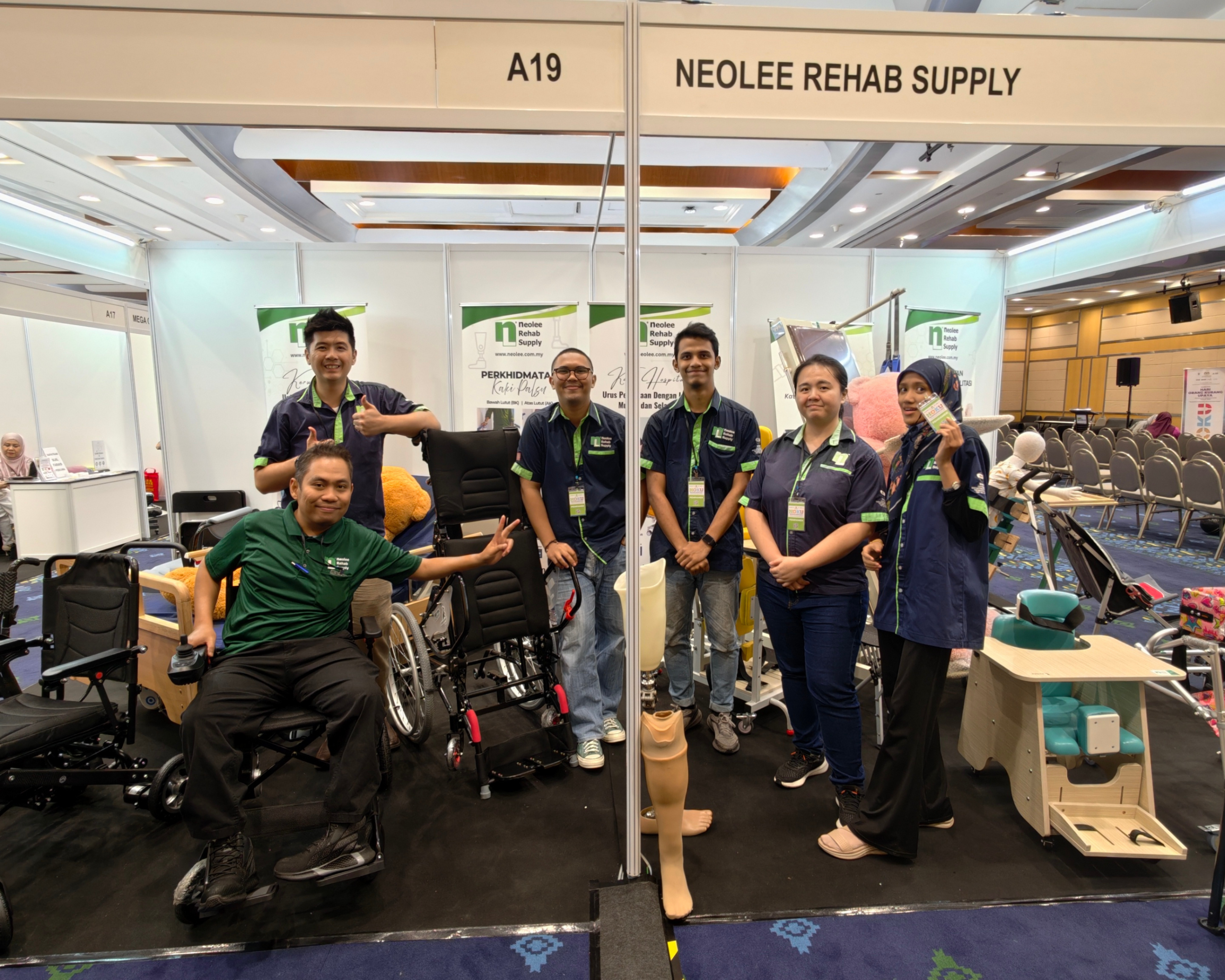
At Neolee Rehab Supply, we’ve been supplying rehabilitation and homecare equipment to Malaysian families for over 20 years.
We understand that buying a wheelchair or hospital bed is often not something a family has planned for. Sometimes the decision needs to be made quickly, and there can be a lot of questions about which equipment is suitable.
Our team can help you explore the options without having to figure everything out on your own.
Need Help Choosing Homecare or Rehabilitation Equipment?
Whether you’re preparing for a family member’s hospital discharge, looking after an elderly parent or setting up a safer home environment, we’re here to help.
You can explore our range of wheelchairs, hospital beds and rehabilitation equipment on our website.
Prefer to see the equipment before deciding?
Visit one of our Neolee showrooms and speak with our advisors. You can compare suitable products, ask questions and get a better understanding of what may work for your family’s needs.
There’s no need to make the decision based on pictures and specifications alone.
Explore online: www.neolee.com.my
Speak with our team: Visit our website to contact us or find your nearest showroom.
Neolee Rehab Supply. Supporting Brighter Tomorrows Together.
Browse paediatric rehabilitation equipment
Our team can help with equipment choices. Government agencies assess and approve assistance applications.
Sources and Further Reading
This guide was prepared using the official Budget 2027 announcement and information published by the relevant government agencies.
- Prime Minister’s Office: Budget 2027 Speech, 9 October 2026
- Ministry of Finance: Budget 2027 Touchpoints
- Ministry of Finance: Budget 2027 Tax Measures
- Jabatan Kebajikan Masyarakat
- ProtectHealth: PeKa B40
- Ministry of Education: Special Education Allowance
- Portal Manfaat
Please note: This article is intended to help readers understand the Budget 2027 announcements. It is not financial, tax or medical advice. Benefit amounts, qualifying conditions, application procedures and implementation dates may change as government agencies publish updated guidance. Neolee Rehab Supply does not administer or guarantee approval for any government assistance programme.
Last updated: 10 October 2026.