
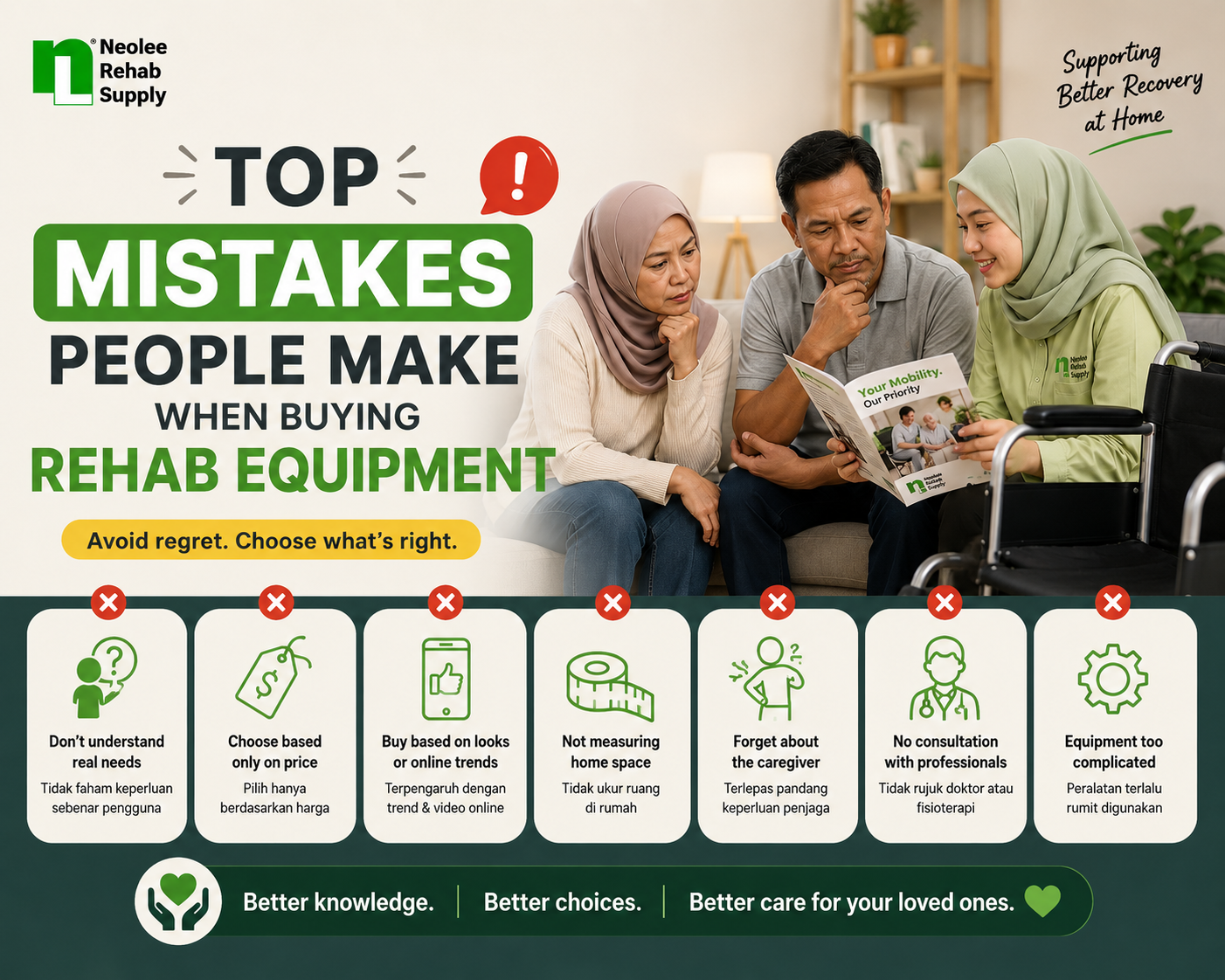
Top Mistakes People Make When Buying Rehab Equipment
Choosing rehabilitation equipment for a loved one can be stressful, especially when families are dealing with recovery after surgery, elderly care, mobility changes, or long-term caregiving. With so many wheelchairs, walking aids, hospital beds, and bathroom safety products available online and in stores, it is easy to feel overwhelmed.
Many families want to make the best decision quickly, but rushing into a purchase can sometimes lead to discomfort, inconvenience, safety concerns, or unnecessary spending later.
This rehab equipment buying guide highlights the most common mistakes people make when purchasing rehab products and how to avoid them. Whether you are a caregiver, family member, elderly user, or rehab patient, understanding these mistakes can help you make more confident decisions for safer and more comfortable home care.
At Neolee Rehab Supply, we do not provide medical advice or diagnose medical conditions. However, we can help guide customers based on their mobility needs, home setup, comfort preferences, and caregiver considerations.

Mistake 1: Buying Without Understanding the User’s Real Needs
One of the biggest mistakes families make is purchasing equipment too quickly without fully understanding the user’s daily needs, mobility level, and home environment.
For example, a wheelchair that works well for one elderly user may not be suitable for another person recovering from surgery or stroke rehabilitation. Similarly, a walking aid that looks practical online may not provide enough support for the user’s condition.
Before buying rehab equipment, ask:
- Can the user stand or walk independently?
- Will the equipment be used indoors, outdoors, or both?
- Is the equipment needed short-term or long-term?
- Does the user require caregiver assistance?
- Does the user spend long hours sitting or lying down?
- Is portability important for travel or appointments?
Different users require different levels of support, comfort, and mobility assistance.
For medical recommendations, families should always consult doctors, physiotherapists, occupational therapists, or qualified healthcare professionals.
Mistake 2: Choosing Based Only on Price
Many people search online for cheap wheelchairs or discounted rehab products to save money. While budget is important, choosing equipment solely based on price may create problems later.
Lower-cost products may sometimes have:
- Less durable materials
- Poor cushioning
- Weak brakes
- Limited comfort
- Lower stability
- Shorter product lifespan
A wheelchair may appear affordable online, but if the seat becomes uncomfortable after long periods or the brakes are unreliable, it may affect both safety and quality of life.
The goal is not necessarily to buy the most expensive product. The goal is to choose equipment that is safe, practical, durable, and suitable for the user’s needs.

Mistake 3: Buying Based on Looks or Social Media Trends
Today, many rehab products are promoted through TikTok videos, livestreams, online shopping platforms, and influencer reviews. Some products may look modern, compact, or stylish online, but may not actually suit the patient’s physical condition or daily needs.
This is one of the newer but increasingly common medical equipment mistakes.
For example:
- A trendy lightweight wheelchair may not provide enough support
- A compact walker may feel unstable for elderly users
- Foldable products may prioritize portability over comfort
- Online “viral” products may not be durable for long-term use
A product that works well for an influencer or another family may not necessarily work well for your loved one.
Instead of focusing only on appearance or popularity, families should prioritise:
- Safety
- Comfort
- Ease of use
- Practicality
- User mobility level
- Caregiver convenience
When choosing rehab products, practicality is always more important than trends.
Mistake 4: Not Measuring the Home Space
Another common mistake is forgetting to check whether the equipment actually fits the home environment.
This happens frequently with:
- Wheelchairs
- Hospital beds
- Shower chairs
- Commode chairs
- Walking frames
Before buying home rehab equipment, measure:
- Doorway width
- Bathroom entrance
- Bedroom space
- Hallway width
- Lift access
- Turning space for wheelchairs
- Bedside clearance for caregivers
A wheelchair may look perfect in the showroom but become difficult to use if it cannot fit through bathroom doors or narrow hallways.
Likewise, hospital beds require enough surrounding space for caregivers to assist safely.
Mistake 5: Forgetting About the Caregiver
Rehab equipment affects not only the patient, but also the caregiver.
Many caregivers — especially petite family members — struggle physically when transferring patients between beds, wheelchairs, toilets, or shower areas.
Repeated lifting and repositioning can cause:
- Back pain
- Neck strain
- Shoulder discomfort
- Fatigue
- Long-term physical stress
Caregiving should not come at the expense of the caregiver’s own health.
When selecting rehab products, families should consider:
- Is the equipment easy to move?
- Is it lightweight enough?
- Can one caregiver handle it safely?
- Does it reduce lifting strain?
- Is the height adjustable?
- Are brakes and locks easy to operate?
The right equipment should support both the patient and the caregiver.

Mistake 6: Buying Equipment Without Consulting a Doctor or Physiotherapist
Some families purchase rehab equipment immediately after hospital discharge without checking whether the product is suitable for the patient’s recovery needs.
Certain conditions may require:
- Specific wheelchair types
- Proper seat positioning
- Pressure relief support
- Walking aids with correct height
- Transfer assistance equipment
- Supervised rehabilitation support
Using unsuitable equipment may affect:
- Comfort
- Posture
- Mobility
- Fall risk
- Rehabilitation progress
Families are encouraged to consult:
- Doctors
- Physiotherapists
- Occupational therapists
- Healthcare professionals
before making major rehab equipment decisions.
At Neolee Rehab Supply, we do not provide medical advice or prescribe treatments. However, we can help guide customers in understanding product features, sizing, comfort, and practical home care considerations.
Mistake 7: Buying Equipment That Is Too Complicated
More features do not always mean better equipment.
Some rehab products come with advanced functions that may confuse elderly users or caregivers. If equipment feels difficult to operate, families may avoid using it properly.
Simple and user-friendly products are often more practical for everyday home care.
Look for equipment that offers:
- Easy adjustment
- Clear controls
- Comfortable handling
- Simple folding mechanisms
- Easy cleaning
- Stable design
The best rehab equipment is often the equipment that fits naturally into daily routines.
Practical Tips Before Buying Rehab Equipment
Before making a purchase, use this checklist:
- Consult healthcare professionals for medical guidance
- Understand the patient’s mobility needs
- Measure your home space carefully
- Consider caregiver convenience
- Compare safety features, not just price
- Focus on comfort and practicality
- Avoid buying based only on trends
- Ask questions about product sizing and usage
- Choose reliable rehab equipment suppliers
A little preparation can help families avoid costly mistakes later.
Recommended Rehab Equipment Categories for Home Care
Depending on the user’s condition and mobility needs, families may consider different types of home rehab equipment.
Mobility Support Equipment
Common products include:
- Wheelchairs
- Rollators
- Walking frames
- Walking sticks
- Transfer aids
These products support safer movement and mobility.
Bedroom & Recovery Care Equipment
Popular options include:
- Hospital beds
- Pressure relief mattresses
- Bedside rails
- Overbed tables
These products may improve comfort and make caregiving easier.
Bathroom Safety Equipment
Bathroom areas are often slippery and high-risk for falls.
Common bathroom safety products include:
- Shower chairs
- Commode chairs
- Grab bars
- Raised toilet seats
- Anti-slip mats

Daily Living Support Products
Helpful daily living products may include:
- Cushions
- Back supports
- Reachers
- Transfer boards
- Patient care accessories
These items may improve comfort and support daily independence.
FAQs About Buying Rehab Equipment
1. What is the most important thing to consider when buying rehab equipment?
Suitability is the most important factor. The equipment should match the user’s mobility level, comfort needs, home environment, and caregiver support requirements.
2. Should I buy rehab equipment online based on reviews or videos?
Online reviews and videos can help introduce products, but every patient has different needs. Families should consider comfort, safety, practicality, and professional guidance before purchasing.
3. Can Neolee recommend the right equipment for medical conditions?
Neolee Rehab Supply cannot provide medical advice or diagnose conditions. However, we can help guide customers based on practical product considerations, mobility needs, sizing, comfort, and home setup.
4. Why is caregiver-friendly equipment important?
Caregivers often assist with lifting, transfers, repositioning, and mobility support. Suitable equipment can reduce physical strain and improve safety for both the caregiver and patient.
5. What are common medical equipment mistakes families should avoid?
Common mistakes include:
- Buying based only on price
- Following online trends blindly
- Not measuring home space
- Ignoring caregiver needs
- Buying overly complicated equipment
- Not consulting healthcare professionals
Conclusion: Choose Rehab Equipment With Confidence
Buying rehab equipment is an important decision that affects comfort, mobility, safety, and daily caregiving.
By avoiding these common mistakes, families can make more informed choices when selecting wheelchairs, bathroom safety products, hospital beds, and other rehabilitation equipment for home care.
Instead of focusing only on price or online trends, prioritise practicality, comfort, caregiver support, and the user’s actual needs.
At Neolee Rehab Supply, we are committed to helping families explore suitable rehab equipment options based on their home setup, lifestyle, mobility needs, and caregiving situation.
Visit our showroom or contact us today to learn more about wheelchairs, walking aids, bathroom safety products, hospital beds, and other home rehab equipment solutions.

